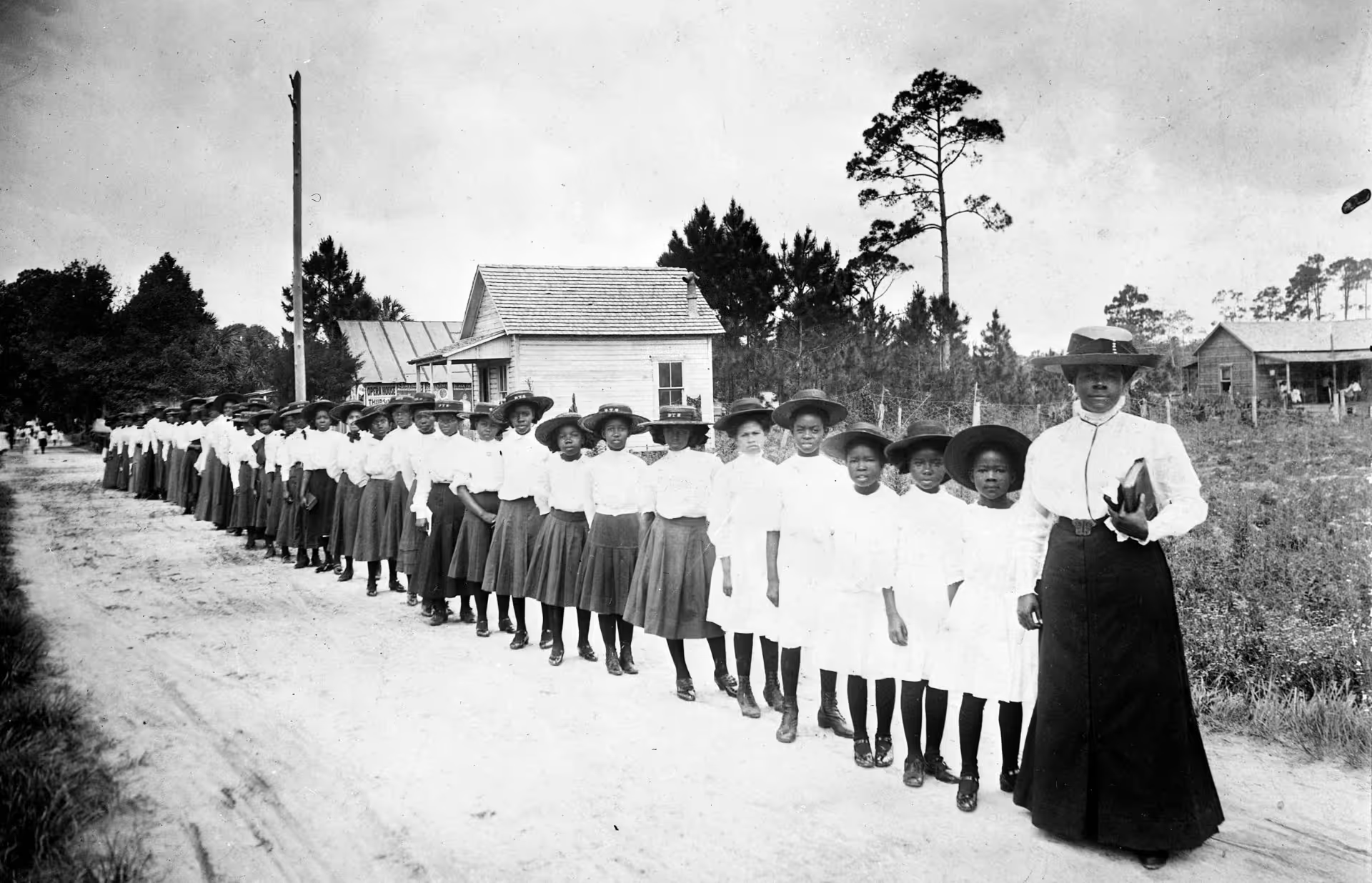
TThe 1954 landmark Supreme Court case that ended segregation in schools, Brown v. Topeka Board of Education, was a catalyst of the Civil Rights Movement and a seminal event in U.S. history that cannot be ignored. Today, 71 years later, we are seeing a rollback in hard-fought progress, amid a well-funded effort to whitewash the honest parts our country’s past. But what most of us don’t know about this period of history is there was an underside to ending segregation. While the focus of Brown has always been on Black students who were able to integrate, it begs the question: What happened to all the Black educators? The story is rather astounding — and the truth will surprise you.
Today’s Black Principals
We talked with Black principals from across the country to tell their stories and understand their experiences and challenges they face today. Weʼll touch on the differences between then and now. Weʼll also explore how we can fortify the Black principal pipeline to attract even more Black principals. Because Black principals are more than role models, they represent the height of excellence. Hear first-person stories of what itʼs like to be a Black principal in the United States today.
So, Where Do We Go From Here?
You’ve learned the history. You’ve met the principals. We hope you’re inspired.
Today, amid the rollbacks of diversity programs across the country, the fact remains that Black people remain underrepresented in all fields — especially in education. There are echoes of Brown in how teacher training programs are being defunded and how people of color are still left fighting for equality. Despite the societal challenges, the numbers don’t lie: students of color comprise the majority of today’s student body. And yet, schools are more segregated now than they were in the 1980s. Before Brown v. Board, 35-50% of educators were Black. Today, that number stands at 11% for Black principals, and teachers of color comprise only 20%. Nevertheless, both students of color and white students benefit from having an educator of color.
White students who have an educator of color also benefit not only academically, but also social-emotionally, as it helps shift their worldview and teaches them empathy for other people’s cultures. Lastly, when students of color see people who look like them in positions of leadership, they can have bigger aspirations. Because if they can see it, they can become it.